Reimagining the Lodge: A Vision for Preservation and Growth
When Brother Robert D. Brink was installed as R.W. Grand Master in December 2025, he made the preservation of iconic Masonic buildings across the state a central initiative of his term. This vision grew from his earlier service as District Deputy Grand Master, where he developed operational and management training programs designed to help Masonic temples and halls remain sustainable, effective and well maintained.
Recognizing that many of the lodge buildings and properties throughout the state would benefit from revitalization, Brother Joseph Jensen, Past District Deputy Grand Master, was appointed chair of the Grand Lodge Committee on Halls, Temples and Lodge Rooms.
In addition to its existing responsibilities, the committee has expanded its mission to provide training and support for Hall and Temple Associations, with a focus on strengthening the management of lodge-owned real estate.
“Organizations can benefit from solid oversight to keep them orderly and functioning well in a changing environment,” said R.W. Grand Secretary Peter M. Kraus, Oasis Lodge No. 416, Edinboro, and a member of the Grand Master’s Committee on Finance. “That outside, fresh energy is indispensable.” Peter served on the board of the Erie Masonic Temple Association (he is a Past District Deputy Grand Master for District 24) and played a key role in the revitalization of its century-old building.
Reflecting on Grand Master Brink’s leadership, Peter said, “Rob was instrumental in encouraging not only his own hall association, but others as well, to follow established regulations and Masonic law. As a fellow District Deputy at the time, that left a lasting impression on me.”
Twelve years ago, when the Grand Lodge held its Quarterly Communication in Erie, no one entered the Masonic Temple because it required extensive repairs. By 2024, however, years of work by consultants and volunteers had transformed the historic property. The Masonic Temple not only welcomed the Quarterly Communication back into the building but also hosted the previous evening’s celebration in The Grand Ballroom.
Today, the Masonic Temple of Erie stands as one of the architectural jewels of downtown Erie. In addition to serving as a historic landmark and gathering place for numerous Masonic organizations, the building has become a popular venue for weddings, receptions and banquets through its event company, 32 West Eighth.
The more than 20,000 square-foot Temple also supports local businesses by leasing 4,000 square feet of office space to six women-owned small businesses, including Purrista Cat Café and Madelene’s Beauty Salon by Trina. Other Masonic organizations, including Erie DeMolay, maintain offices on the building’s upper floors.
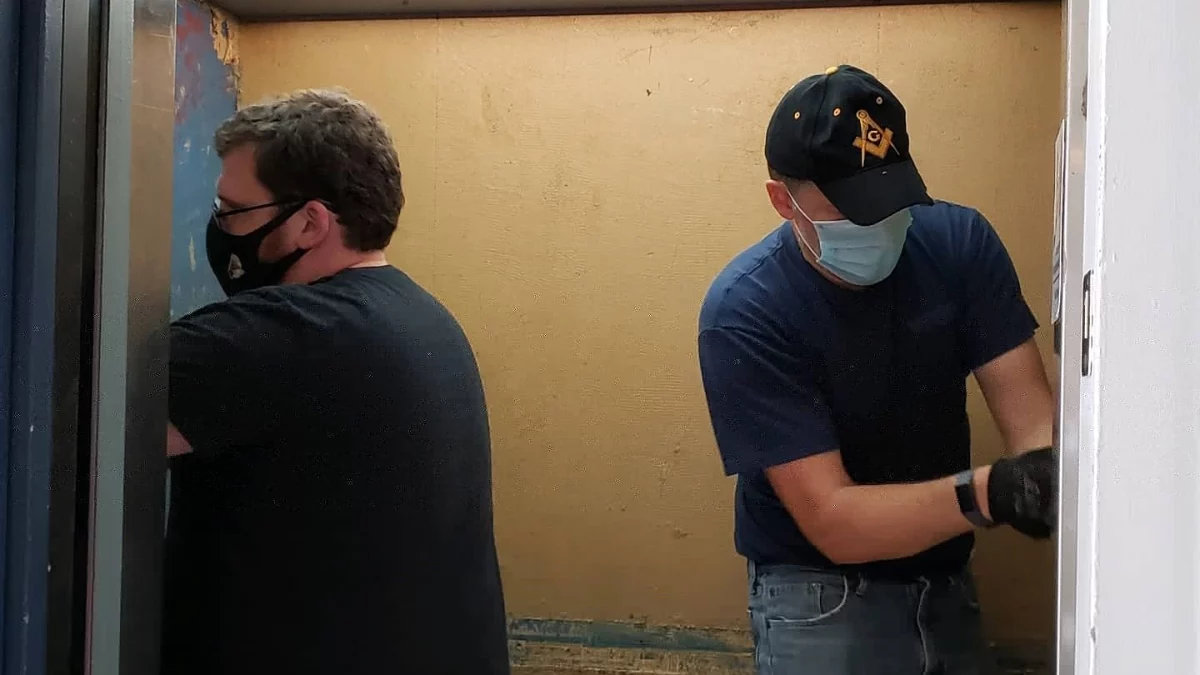
Over the years, the Temple has undergone a series of major capital improvements aimed at preserving the historic building for both the fraternity and the broader community. These projects have included upgrades to the heating, cooling and electrical systems, as well as the installation of new elevator controls. Additional enhancements to the building’s common areas are still underway to create a more welcoming experience for guests.
“The 115-year-old building was always designed to be operationally self-sustaining,” Peter said. “Its commercial spaces were intended to support operations so the lodges don’t have to continually fund toward maintenance and can focus on capital improvement instead.”
In 2019, the Erie Masonic Temple building was placed on the National Historic Register, and a year later, formally listed on the National Register of Historic Places. That same year, the Erie Masonic Temple Preservation Foundation was established to preserve and restore the building. The foundation obtained public charity status and was granted 501(c)(3) tax-exempt status.
Since then, it has supported its mission through grants, fundraising activities and events, as well as individual contributions.
While the Masonic Temple of Erie (and a handful of other Masonic buildings in Pennsylvania) largely forged its own path through hard work and guidance from the Grand Master and outside consultants, the new training initiative aims to make that process easier for other hall associations and lodges that own their buildings.
By combining targeted education with support from skilled professionals in their crafts, the program will offer practical tools and guidance for preserving, managing and revitalizing Masonic properties throughout the state.
“The training will help associations recognize issues with their buildings early on,” Peter said. “The Grand Master wants to make sure buildings are presentable but also serve a purpose.”
And it’s not just about maintaining large, iconic structures, like the Masonic Temple in Philadelphia. Smaller and mid-sized lodges across the state, including those in more remote areas, also require the same level of care and attention, Peter said.
“Some of these lodges are so far removed, they may not know what’s going on [in Philadelphia],” he said. “The importance of the Grand Lodge taking this information and education to them is huge.”
The Grand Lodge has been a strong supporter of Erie’s building restoration efforts, recognizing both the historical value of the Temple and the important role a physical lodge plays as a visible representation of the fraternity within the community.
Brother Ethan R. Sykes, District Deputy Grand Master of the 24th Masonic District, said he worked closely with Peter (and his wife Pauline, who helped manage event sales) on the Temple’s reinvention. With a background in property management, Ethan spent years in the field and now oversees much of the leasing and contract work for the building.
The current effort to revitalize the historic Temple in downtown Erie began in 2016, Ethan said. At the time, the Temple management had little experience with operating a seven-story, mixed-use commercial building and had to learn how to become effective landlords as the work progressed.
“We had to modernize the mechanical systems, install air conditioning, repaint the lobby and complete waterproofing,” Ethan said. “The building had good bones but didn’t meet the needs of the modern tenant. We had to go from point A to point E, and we weren’t sure of the other steps to get there.”
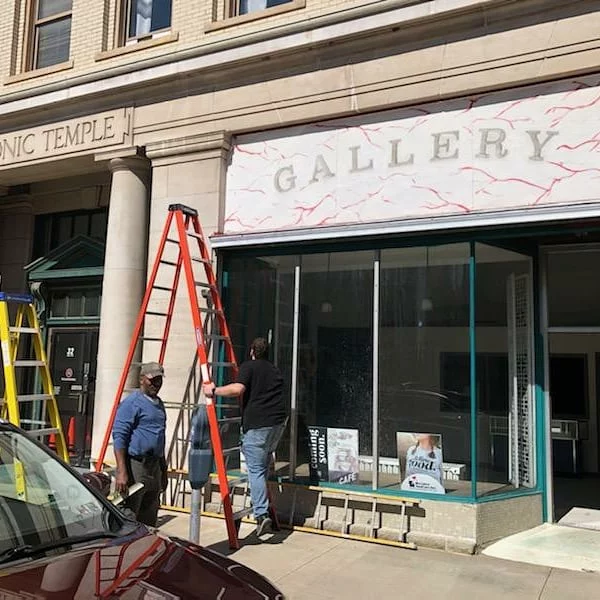
The renovated storefronts officially opened for business in 2022. At the same time, the lodge began opening the space to the broader community for gallery nights and other public events. In some cases, visitors were impressed and felt welcome enough to later submit formal petitions to join the fraternity.
The Masonic Temple is one of the oldest and most architecturally distinguished buildings still in existence in the city of Erie. Most of the other buildings constructed in the early 20th century have been destroyed. Ethan hopes that the Masonic Temple of Erie will continue being a beacon in the architectural heritage of the community.
“Having a strong presence here is essential,” he said. “As soon as a building is gone in a town, it’s never coming back. When lodge buildings disappear, we lose not only a physical space, but also a vital way to connect with and give back to the community.”