
A Lodge of Craftsmen
With so many people experiencing “digital burnout” right now, Brother Bill Rhoda’s South Philadelphia typewriter business, Philly Typewriter, is thriving, not failing – as one might expect.
Philly Typewriter, considered the largest typewriter company in the world, houses over 1,300 machines spanning 130 years of history and specializes in the repair and preservation of typewriters.
Founded by Bill, 36, William Penn-Harmony Lodge No. 52, Philadelphia, the business has become a significant hub for typewriter enthusiasts and collectors, of which there are many. The goal of the business, open since 2017, is “for you to take home a fully functional piece of history,” according to the website. Some of the typewriters are more than 100 years old.
“Some of our biggest clients are IT professionals and writers who stare at their computer screens all day,” Bill said. “After a while, it’s too much. Typewriters provide a connection that is lost in our fast-paced world. People are missing that connection and want to get back to something thoughtful and patient and just … theirs.”
Bill is not the only one feeling a sense of nostalgia. In the age of technological advancement, mass production and AI, true artisans are becoming increasingly hard to find. Bill is one of several members of Lodge No. 52 with a high level of expertise and commitment to their craft. The lodge celebrated 234 years in October 2025.
“Lodge No. 52 is comprised of literal ‘craftsmen,’ with typewriter mechanics, watch makers, clock builders, glass blowers, pipe organ builders and more represented,” said Jonathan Yusen Liu, W.M., a civil engineer by trade and a blacksmith by hobby.
“What that means is that we understand the true value of being an apprentice, a journeyman and a real master craftsman,” he said. “Through our members, we don’t just emphasize the importance of working with our hands, but also the value of every step, the training to do it right and the maintenance to make it last.”
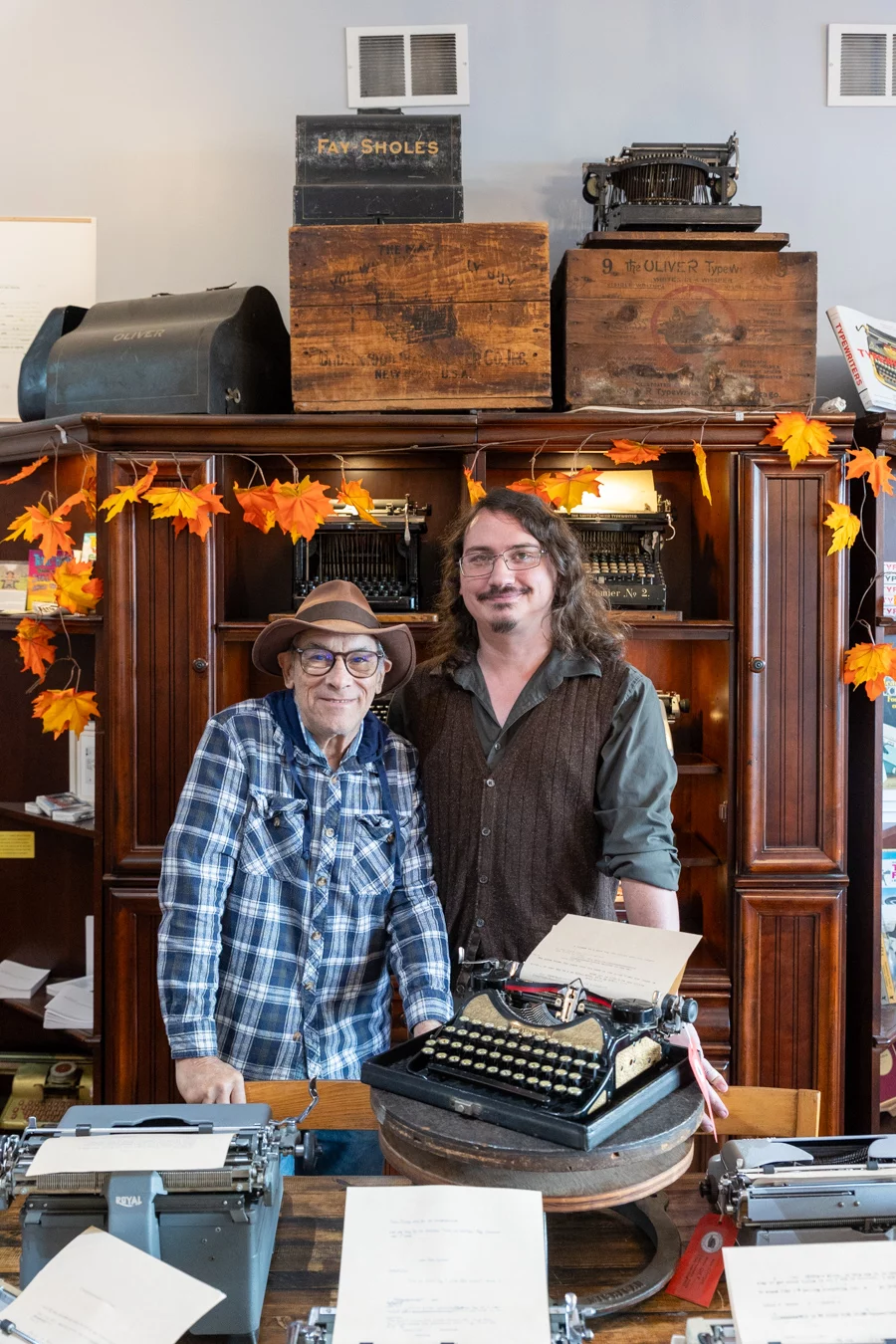
Bill, a typewriter mechanic, began his career journey after meeting his now partner, Bryan Kravitz, while he was selling typewriters on the same street corner where his family used to have a hot dog stand. It was an instantaneous friendship that blossomed into a “father-son” relationship. Bryan is now co-owner of the business and its lead mechanic.
“Bryan worked on IBM Selectrics [an electric typewriter from the 1960s] and owned a typewriter shop in the 70s and 80s but didn’t have the training in manual mechanical typewriters,” Bill said. “He ended up back in Philadelphia and in 2014, started selling typewriters as a hobby. When we met in 2017, I was looking for a new adventure and he was ready to expand but didn’t have a partner. That’s how Philly Typewriter came to be.
“We love typewriters – and we want to spread that love and enjoyment to as many people as we can.”
In 2018, Bryan launched the Philadelphia Public Typewriter Program, which lends typewriters to public spaces like schools, libraries, cafes and bookstores.
“I always tell people a typewriter is a machine that writes, and a computer happens to write but can also order your lunch,” Bill joked. “A typewriter is a distraction-free zone. It’s the pinnacle writing instrument. It does what it’s supposed to do.”
The Philly Typewriter space at 1735 East Passyunk Avenue is open to the community in the evening for various events, including lodge events such as their famous Esoteric nights. In 2022, Bryan took the business on the road with a lecture series exploring the history of the typewriter.
Bill has been a Mason for more than three years. He believes that Freemasonry aligns closely with the work he does.
“I see connections between my work and the working tools of Freemasonry,” he said. “You have to select the correct tool for the job, because choosing the wrong one can cause damage, so I learn patience in my decision, which is like Freemasonry and the tools Masons use to live their lives. The tools in my shop teach me lessons, too.”
“This work keeps me young,” said Bryan, 76. “Running around with 30 and 40-somethings keeps my brain and hands sharp, and I get to relive a dream I thought had ended in the 1980s.”
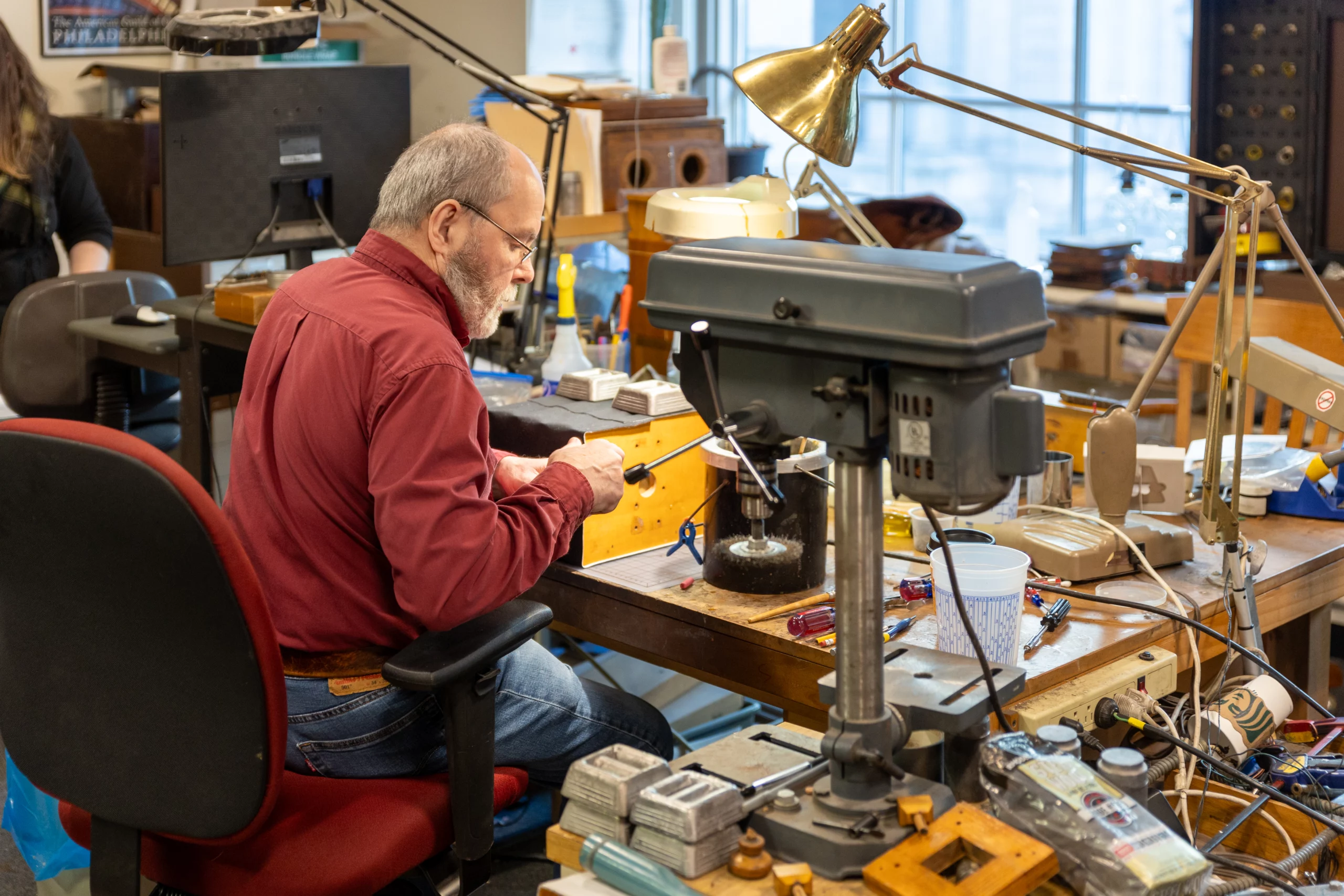
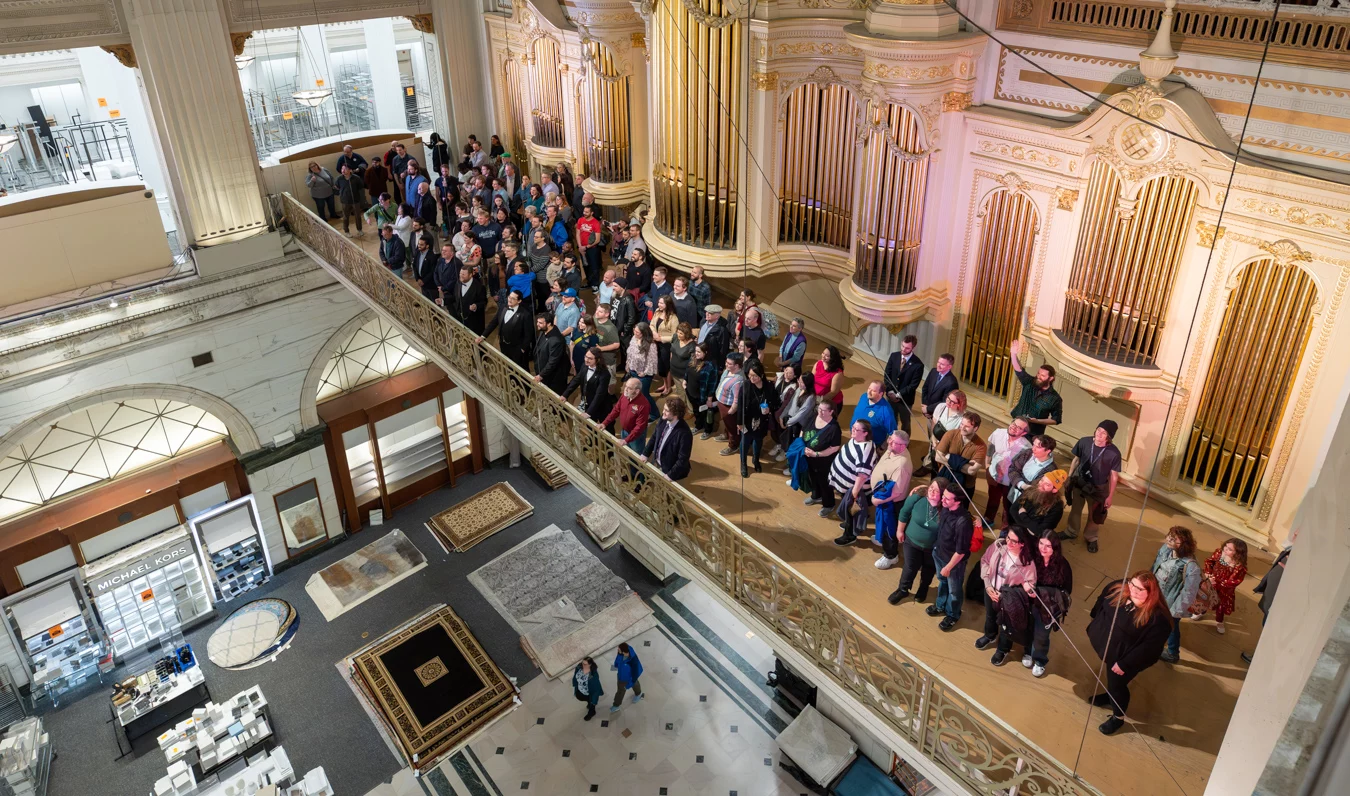
Brother L. Curt Mangel III is Chaplain of Lodge No. 52 and curator of the Wanamaker organ, located in the historic Wanamaker building in Philadelphia. He equates taking care of the 121-year-old organ to the deep appreciation Masons have for the seven liberal arts they study. Brother John Wanamaker was a prominent Philadelphia merchant and Freemason who died in 1922.
“Masons are taught to do their highest and best work in anything they do, and to value tradition and beauty.
“My life’s been about restoring ‘theater palaces’ [now known as movie theaters] when I was a kid, and now the honor of taking care of this incredible instrument,” Curt said. “It just kind of goes with the way we think about art, science and all the beauty of the world.”
9I4A8106
Bryan Kravitz and Brother Bill Rhoda
9I4A1196
Brother L. Curt Mangel III
9I4A0964-Enhanced-NR
Lodge No. 52’s trip to see a concert with the Wanamaker organ

